


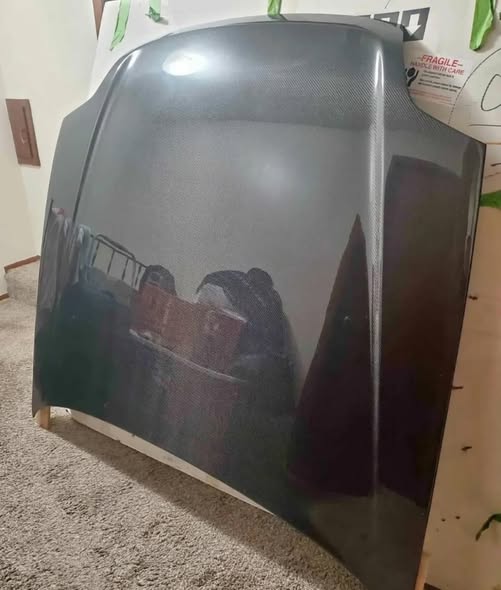
A Seibon Carbon Fiber Hood (OEM or OEM-style) for the 1997–2001 Honda Prelude (BB6) is a classic “period-correct” upgrade that balances weight reduction with the aggressive aesthetic of the late-90s/early-2000s import scene.
Since you are looking at high-end parts like ZE40s and CSS blocks, here is the technical breakdown of what to expect from a Seibon unit on a 5th Gen Prelude.
1. Construction & Weight
-
Material: Seibon typically uses a “Grade A” carbon fiber top layer with a 2×2 twill weave, bonded to a fiberglass skeleton for structural rigidity.
-
Weight Savings: The stock Prelude steel hood is notoriously heavy (approx. 40–45 lbs). A Seibon carbon hood usually weighs between 18–22 lbs.
-
Benefit: On a front-heavy car like the Prelude, removing 20+ lbs from the nose significantly improves turn-in response and weight distribution.
-
2. Available Styles
For the 97–01 Prelude, Seibon generally offers two main looks:
-
OEM Style: Matches the factory lines perfectly. Best for a “clean” build or if you plan to paint-match the sides and leave the center carbon exposed.
-
VSII / TS / MG Styles: These feature functional vents/louvers.
-
Technical Tip: If you are running a high-compression B16B or a K20A2 swap in a chassis like this, vented hoods are excellent for heat extraction, though they require more maintenance to keep the engine bay dry.
-
3. Fitment & Installation
-
The “Lude” Gap: Preludes are sensitive to hood alignment. You will likely need to adjust the rubber bump stops and the hood latch height to get the gaps perfect.
-
Windshield Washers: Most Seibon hoods do not come pre-drilled for the washer nozzles. You’ll need to carefully drill them yourself or relocate the sprayers to the wiper arms for a “shaved” look.
-
Hood Pins (Safety): Seibon and most tracks strongly recommend using hood pins (like Aerocatch). Carbon hoods are light and held by a single latch; at high speeds, the air pressure can cause the hood to flutter or, in extreme cases, snap open.

Reviews
There are no reviews yet.